Marathon Beneva: Traffic disruptions
8 October 2026
Special infection prevention measures at the Montreal Children’s Hospital
Read moreWelcome to the Montreal Children's Hospital

21 August 2026
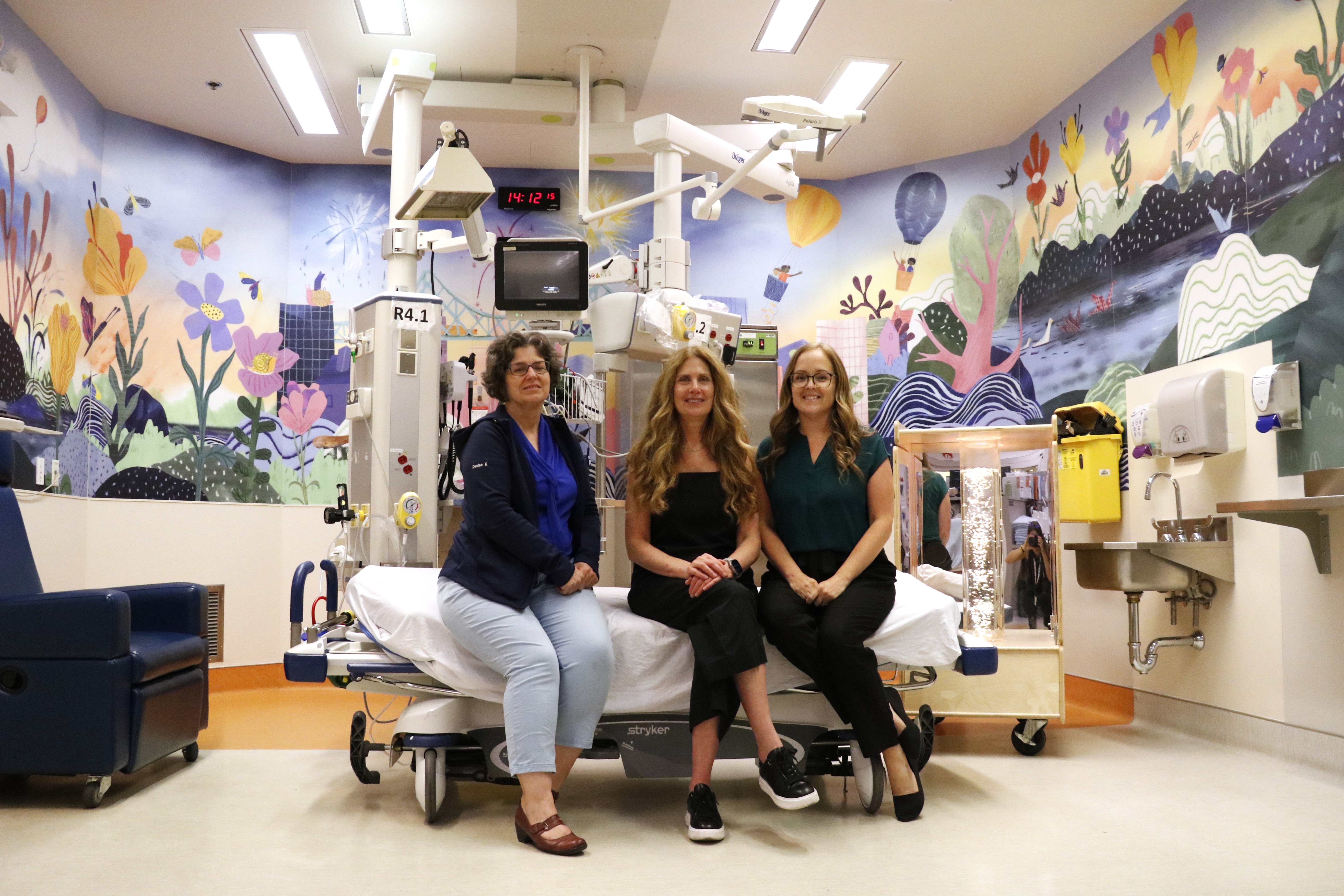
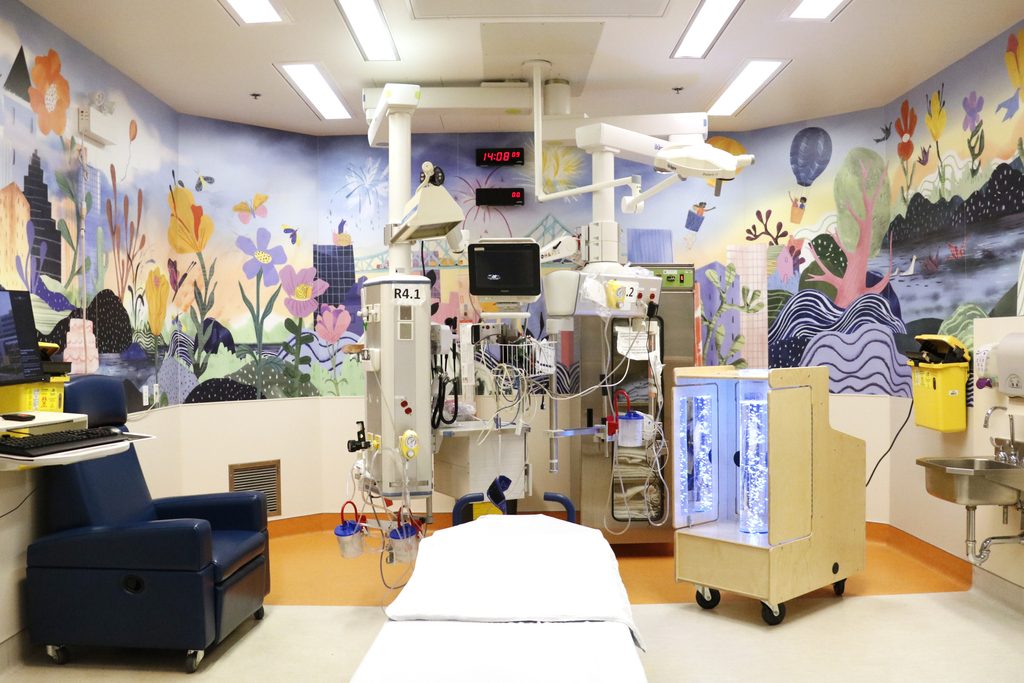
There’s a treatment room in the Emergency Department (ED) of the Montreal Children’s Hospital (MCH) that was transformed last year into a space with colourful murals of birds and flowers set against the Montreal skyline. Known as the Distraction Room among the ED team, the space is a beautiful oasis in the ED. But it also serves an important role in patient care, and the finished work is the result of bringing science and art together.
Dr. Laurie Plotnick, an emergency physician in the MCH ED and director of the department from 2019 to 2024, was one of the key people responsible for getting the project off the ground. In 2017, Dr. Plotnick and Dr. Jessica Stewart attended a conference in the United States on pain and sedation, where one of the lectures focused on creating safe spaces for children receiving procedures in emergency. They began to review the published literature on the benefits of distraction in redu-cing pain perception, and from there, the idea to create a distraction room at the MCH was born.
In 2019, Drs. Plotnick and Stewart submitted a proposal to the MCH Foundation and eventu-ally secured funding from an interested donor. “We were so appreciative to have the support of the MCH Foundation,” says Dr. Plotnick.
“We immediately began work on the project and enlisted the input of various stakeholders.”
This included Valerie Frost from the MCH Foundation, nursing leadership mem-bers Violaine Vastel, Denise Kudirka and Kelly Cummins, Annette Ridenour from Aesthetics, a company that worked on the ED waiting room project, and illustrator Josée Bisaillon.
“There are six rooms in the ED resuscitation area, and we chose one room as a type of pilot project,” says Kelly. “We can do a resuscitation in that room, but we also do a lot of procedures. We met with Josée a few times during the planning process. We wanted something that could be appealing to all ages, be interactive and representative of Montreal.”
Long term benefits
On a typical day in the ED, there may be 40 to 50 patients who require either a painful or anxiety-producing procedure such as a blood draw, lumbar puncture, laceration repair, an intravenous insertion or even needing a mask for asthma. The goal of the room’s design was to have a very broad appeal and be calming but also engaging. The committee set out to create a space that spoke to patients from different back-grounds, ages, developmental abilities and experiences.
They also wanted the space to appeal to adults who are in the room with their children. “The procedures we do can cause anxiety for parents and caregivers too,” says Dr. Plotnick. “They’re worried as they see their children undergoing something painful or that causes fear. And we know from published literature that different types of artwork and dis-traction tools absolutely reduce people’s perception of pain and anxiety, whether it’s the patient or their caregivers.”
More than meets the eye
Inside the Distraction Room, no matter which way you’re facing, there’s something to see. The colourful murals, which were created on infection-control approved material that is easy to clean, fill the walls and part of the ceiling, and the ways to make use of the space are many. For example, nurses and physicians can ask a patient, “How many birds do you see?” or “Can you find the pink balloon?” while these ED team members focus their attention on the procedure itself. They can also invite parents to do the same with their child.
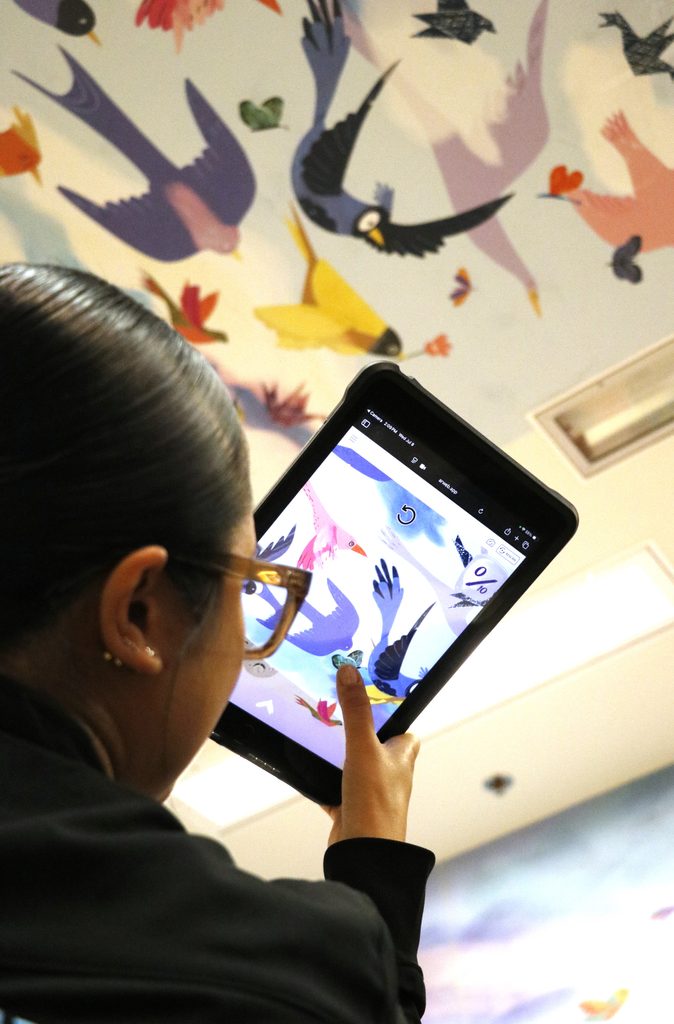
There is also an interactive component at work: the department’s two Child Life specialists, Danae Lim-Cesario and Veronica Chan, use iPads which animate the walls and bring to life some of the mural images. Users can make the birds fly or call up black and white images of the illustrations on the wall, then colour these in on the tablet. Danae and Veronica love working with the murals and add that the room’s resources and tools allow them to support both pa-tients and parents by helping to mini-mize stress and maximize coping.
The Distraction Room also has a Snoezelen cart, a mobile multisensory unit which includes a bubble tube, fiber-optic strands which change colour and ambient lights. “The cart is especially useful for children with different sensory needs, such as children with autism or developmental delays,” says Dr. Plotnick.
Dr. Plotnick points out that the experience in the Distraction Room may also have lifelong benefits for a child or teen.
“If it’s the child’s first time in the emergency department and their experience is not stressful, there’s a better chance that the next time they have a procedure they’ll be less anxious or fearful.”
She adds that this can have far-reaching benefits well into adulthood.
“By reducing a child’s fear and pain we’re reducing the chance of a negative experience. We’re helping to set children and their families up for success with healthcare visits throughout their lifetime.”
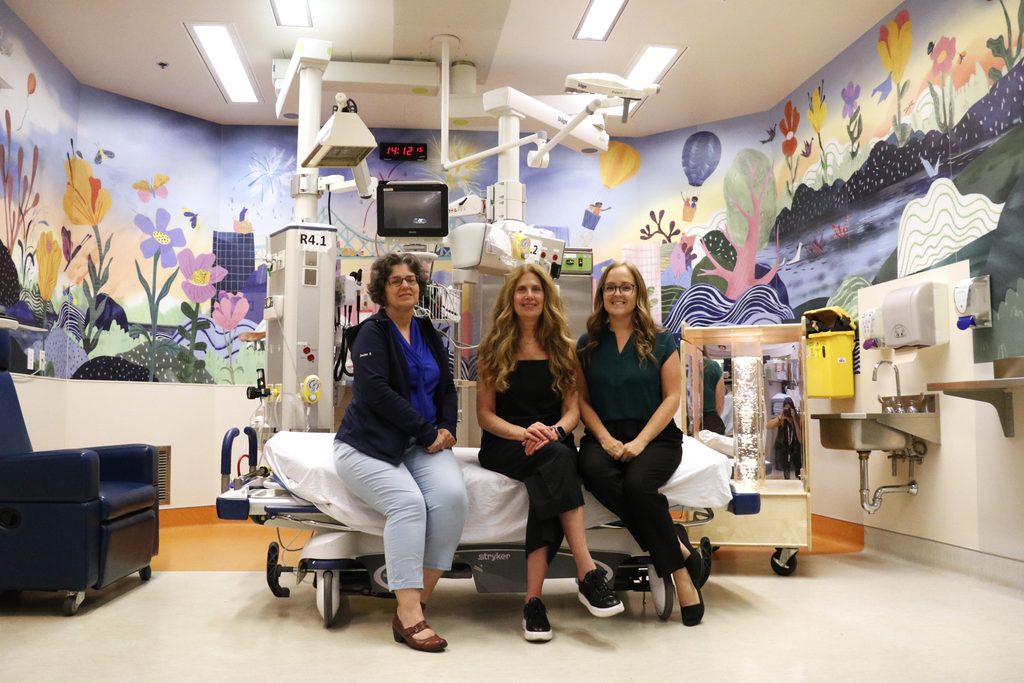
The Distraction Room has been in use for nearly a year, and the staff who have used it are very positive about its benefits. Many of them say it’s easy to make use of the space and they don’t have to think about finding other distraction materials to bring into the room.
Dr. Plotnick would like to see other rooms in the ED and throughout the hospital developed in this way.
“I hope that the success of our Distraction Room will serve as a springboard for other departments in the hospital to do the same, because it has proven to be a very effective part of our care.”
This article was originally written for the Summer 2026 edition of Chez nous magazine.
Marathon Beneva: Traffic disruptions
8 October 2026

Plan your travel – Major cycling events in September
25 August 2026

Building collaborative care in northern communities
21 August 2026
Arnaud: five months of courage, care… and hope
20 August 2026

Shaping the future of children’s healthcare together
17 June 2026