Keeping stomach flu at a healthy distance
28 February 2024
Rise in respiratory infections and measles outbreak: important infection prevention measures at the Montreal Children’s Hospital.
Read moreWelcome to the Montreal Children's Hospital

19 December 2025
Measles: what you need to know
How to keep your family safe from this highly contagious disease
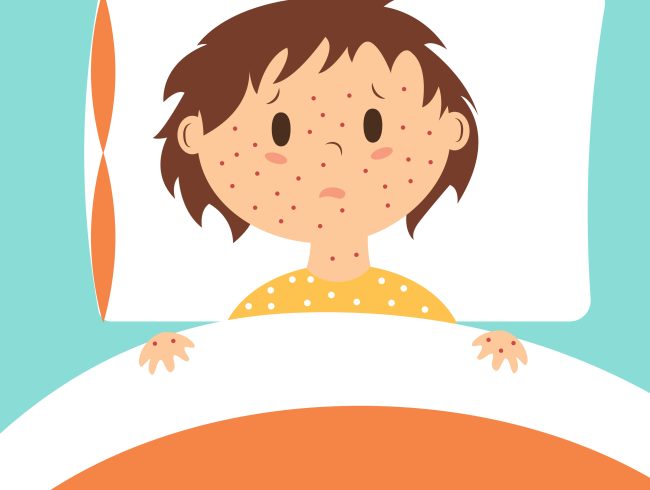
You may have thought that measles was a childhood disease of the past, but recent outbreaks of the disease in Quebec and Canada have raised concerns among parents and healthcare professionals.
Although it seems fairly harmless with its red spots, measles is one of the most serious contagious childhood diseases because of the serious complications associated with it, such as:
Complications are more common in people whose immune systems are weakened by treatment or serious illness (e.g., leukemia) and in babies under one year of age.
However, it is important to note that unvaccinated adults, especially those born after 1970, are more likely to contract the disease and suffer complications.
Facts about measles
The importance of measures to control transmission
If you suspect that you or your child has measles or think you may have been exposed:
Since the measles virus is transmitted through the air, it is essential to immediately isolate anyone suspected of having or diagnosed with measles in a well-ventilated room with the door closed as soon as they arrive at a healthcare facility to avoid exposing others.

The importance of measles vaccination
Vaccinating your child against measles is the best way to protect them against this highly contagious and potentially serious disease.
Currently, two doses of the combined measles, mumps, rubella, and varicella (MMRV) vaccine are recommended for children. According to the Quebec Immunization Protocol, the first dose should be given at 12 months of age and the second dose at 18 months of age.
Any child who is not vaccinated and is exposed to the disease is likely to contract it simply because it is one of the most contagious infectious diseases.
How do you know if you need to be vaccinated?
Since measles was widespread before the 1970s, when there was no measles vaccination program, it is likely that people born before 1970 have had the disease even if they have no memory of it, and they probably do not need vaccines.
People born between 1970 and 1979 should have received one dose of the vaccine. A single dose of the vaccine would be sufficient, as these individuals are considered to have received a natural booster dose through exposure to measles, which was endemic (i.e., present everywhere) in the 1970s. However, some people born during this period (between 1970 and 1979) should receive two doses. These are people who are at greater risk of being exposed to or transmitting the disease because of their occupation (health care workers) or because they travel to countries where measles is widespread (travelers or military personnel).
If you have any questions, you can call Info-Santé (by dialing 811), consult your doctor, or contact the CLSC affiliated with the Centre de santé et de services sociaux (CSSS) in your area.
Is the vaccine free in Quebec?
Yes, you can get the vaccine for free at the CLSC affiliated with the CSSS in your area or from a vaccinating doctor. In addition, several healthcare professionals in Quebec can prescribe and administer the MMRV vaccine, including doctors, pharmacists, nurses, midwives, and respiratory therapists.
Is the vaccine safe?
Yes. The vaccine has been around and in use for about 60 years. It has proven effective in preventing and controlling measles, rubella, and mumps. It is very safe. In most cases, the vaccine causes no reaction. Local reactions at the injection site are possible, but they are short-lived.
Sometimes, the vaccinated person may experience fever and a temporary, non-contagious rash between the 5th and 12th day after vaccination. Encephalitis (inflammation of the brain caused by infection) can occur in 1 in 1 million vaccinated people, while the risk of encephalitis associated with measles is 1 in 1,000. Other reactions may also occur.
Autism is not caused by the MMR or MMRV vaccine. If you would like to learn more about the vaccine, the Public Health Agency of Canada website can answer many of your questions.
Public Health Agency of Canada: Vaccine-preventable diseases Measles
Quebec Health and Social Services: Measles outbreaks
Cases of measles are currently on the rise in Quebec. To find out more about this disease and how to protect yourself, read the latest media interviews with experts from the Montreal Children’s Hospital.
Here are interviews given to francophone media outlets:
Keeping stomach flu at a healthy distance
28 February 2024

Preventing Spread of Infection in Hospital: It is in your Hands
12 September 2023
Fever in infants and young children
25 July 2017

The lowdown on lice: should you worry?
14 August 2013

True or false? Antibiotics will cure the flu.
12 November 2012
14 October 2008