Warning: Carbon monoxide incidents during icy weather
11 March 2026
Rise in respiratory infections and measles outbreak: important infection prevention measures at the Montreal Children’s Hospital.
Read moreWelcome to the Montreal Children's Hospital

10 March 2026
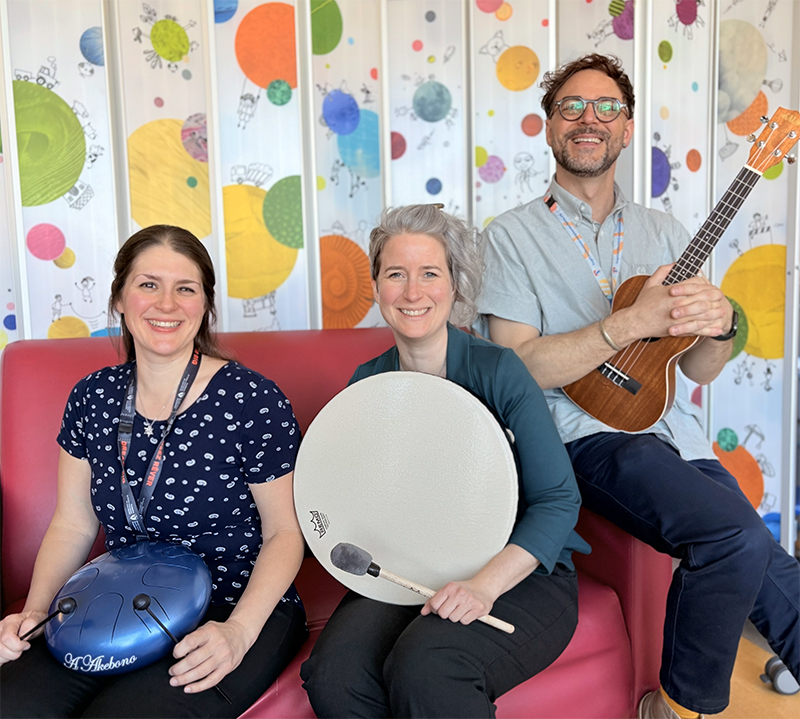
In recognition of Music Therapy Awareness Month, we invite you to discover how this therapy contributes to the well-being of children, adolescents, and their families at the Montreal Children’s Hospital.
From neonatology to intensive care to child psychiatry, music therapists are involved at key moments in the hospital journey. Their work is part of a rigorous clinical approach, integrated across interdisciplinary teams, while leaving an essential place for relationships and creativity.
In Neonatology, Christelle Jacquet supports the very first interactions between babies and their parents, sometimes in complex medical situations. Guided by a music therapist, parents learn to use their breathing, voice, and simple songs from their cultural or family traditions to soothe their children.
These techniques promote relaxation and support neurodevelopment, while structuring periods of wakefulness and rest. They also restore confidence to parents who may be hesitant to touch their baby due to prematurity or medical equipment. By learning how to position their hands, modulate their voices, and gradually incorporate massage that respects the infant’s tolerance, parents regain an active role in their baby’s care.
Siblings and grandparents can also participate in the sessions. These shared moments, sometimes accompanied by guitar, create meaningful memories and foster a sense of normalcy during hospitalization.
In the Hematology-Oncology and Pediatric Intensive Care Units, Tanya Lavoie works with children experiencing stress, uncertainty, and a loss of control related to their illness and treatments. Music therapy provides a safe space for them to express their emotions and regain a sense of autonomy.
Integrated into the hospital’s overall approach, the program is run by professionals certified by the Canadian Association of Music Therapists. Interventions are tailored to age and medical condition: percussion exploration for younger children, piano improvisation, mindful music listening, or songwriting for older children.
Composing often allows children to express their fear, anger, or frustration in words. Clinically, music activates brain networks linked to emotional processing, helping to reduce anxiety and boost self-esteem. For many families, seeing their child smile or actively engage in a musical activity is a highlight of their hospital stay.
In the Child Psychiatry Unit, Julien Peyrin emphasizes empowerment. Young patients are involved as care partners and take part in the creation of tools that they can reuse after their hospital stay.
The interventions take various forms: percussion improvisations to channel energy, exploration of melodic instruments to build confidence, and recordings of original music (music and lyrics) to help them express their reality in their own words.
The Customized Audio Montage (CAM) method promotes mindful music listening tailored to emotional needs, aiming to soothe, support sleep, or encourage behavioural activation. Patients report an improved ability to calm themselves, manage emotional outbursts, or regain energy. Beyond the sessions, they leave with concrete strategies and sometimes the desire to continue practising an instrument.
At the Montreal Children’s Hospital, music therapy is fully integrated into patient care. Whether it’s creating a first bond in neonatology, helping a child through demanding treatments, or giving an adolescent lasting self-regulation tools, music becomes a powerful therapeutic lever.
Every day, it helps humanize the hospital experience and gives young patients and their families a space for expression, meaning, and well-being.
Warning: Carbon monoxide incidents during icy weather
11 March 2026

New case-based textbook explores complex pediatric colorectal care
25 February 2026

Winter‑related injuries: MCH Trauma Centre issues safety reminder
24 February 2026
Celebrating Critical Care Transport Nurses at the MCH
18 February 2026

Psychoeducation: test your knowledge!
18 February 2026

Insightful words from a pediatric psychologist
2 February 2026
Roll up your sleeves! The MUHC blood drive is back!
16 January 2026
2025–2026 Accessibility Action Plan approved
16 January 2026